Stepping into a car that has been parked outside during Dubai’s peak summer days, even for twenty minutes, can make your car interior so hot that the steering is hard to hold, the seats are too hot for bare skin to tolerate, and the AC system is fighting the intense heat. This is very common across the Emirates from May to September. To get this problem resolved, people go for window tinting, which is one of the most effective and practical ways to fix cabin heat and reduce interior damage during peak summer days.
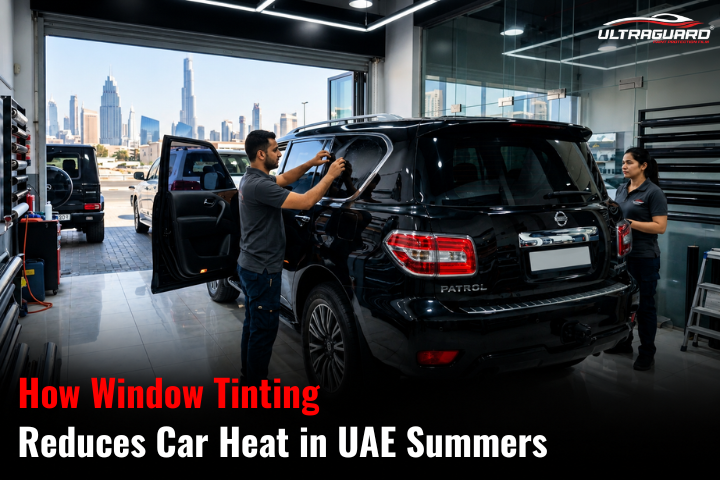
Why UAE Summers Make Heat Rejection Unbearable
In Dubai, Abu Dhabi, and Sharjah, the temperature normally reaches up to 45°C, and during this peak summer time, if your car is parked directly under the sunlight, there is a high chance that your car’s temperature can reach even higher. Untreated car glass lets more IR and UV rays enter the cabin, which can make the interior so hot even if the AC is on. This is exactly the environment window tinting Dubai drivers rely on their film to handle.
Car window tinting has therefore earned its place as a necessity rather than a cosmetic add-on for anyone living in the Gulf. You can ask any resident how car tint has helped to resolve this major issue; that’s why car window tinting has become the first priority after buying a new car.
How Does Window Tint Block Heat
These sunlight components can harm your car: visible light, ultraviolet rays, and infrared radiation. The IR radiation is mostly responsible for most of the heat that is trapped inside a vehicle. A good-quality heat-rejection window film is engineered to reflect and absorb this IR energy before it ever reaches the glass surface, rather than simply darkening the window to cut glare.
A high-quality, modern film has these technologies that help to reduce the heat:
-
Nano-ceramic film(NCT): They are metal free and has a non-conductive layer that can reject all the IR heat without interfering with GPS or mobile signals and also gives interior comfort.
-
Carbon ceramic film: It uses a dispersed carbon layer for consistent heat and UV rejection with better clarity.
-
Multilayer optical and magnetron sputtering film: It uses ultra-thin layers to reflect infrared energy, giving the highest heat rejection performance available in the market.
These days, UAE installers believe in installing a high-performing automotive window film that is capable of rejecting up to 99% of IR heat and the same with the UV rays, making the interior of the car cool and comfortable.
NOTE: Know More about Carbon Ceramic Vs Nano Ceramic
What Actually Happens Inside the Cabin After Tinting
|
Factor |
Untinted Car |
Car with Quality Tint |
|
Dashboard surface temp (after 30 min in sun) |
70°C+ |
Noticeably lower, often 15–20°C cooler |
|
UV exposure to skin and upholstery |
Minimal protection |
Up to 99% blocked |
|
AC cool-down time |
Longer, higher compressor load |
Faster, reduced load |
|
Interior fading (leather, dashboard, trims) |
Accelerates over 2–3 years |
Significantly slowed |
|
Glare while driving |
High, especially at sunrise/sunset |
Reduced, safer visibility |
The reduction in AC loads matters more than most drivers even realize. When the cabin gets hot, even if the AC is not working properly, there is a lot of load that is directly coming to the compressor, which also increases fuel consumption, and in some vehicles such as EVs, it drains the battery even faster, which is also a growing concern for drivers who are using an electric model in the UAE.
Heat Protection Is Only Half the Story
A window film is not enough; a properly installed window film is very important. UAE sunlight is very harsh and is capable of cracking dashboards, fading leather and fabric within a few years if it is left unprotected and not taken proper care of. Blocking up to 99% of UV radiation is not a marketing line; it's a meaningful reduction in daily sun exposure for drivers and passengers alike, and another reason window tinting has become standard practice rather than an optional extra.
There's also privacy and security. A tinted cabin makes it harder for anyone to see valuables left inside a parked car, a small but real benefit for both personal vehicles and fleet cars parked overnight in shared parking areas. These combined benefits are why car window tinting keeps showing up on every new car owner's to-do list, right alongside insurance and registration.
Choosing the Right Car Window Tint for UAE Drivers
It's important to tint smart, not just dark. If we talk about the UAE federal traffic law, private vehicles are permitted with a maximum tint darkness of 50% VLT on the side and rear windows, and the front windshield should remain clear from the top. Installing anything darker without a medical exemption from Dubai Police can result in fines and inspection failures at Mulkiya renewal. Getting this balance right is the whole point of professional car window tinting Dubai services: legal compliance without sacrificing comfort.
The key thing to understand is that heat rejection and tint darkness are not the same thing. A lighter, nearly transparent Window Tint for cars built with ceramic or multilayer optical technology can reject 90–99% of infrared heat while staying fully within the legal 50% VLT limit, meaning you don't have to break the law to stay cool. This matters just as much for company fleets as it does for individual owners, since commercial vehicles often face stricter or separate tint regulations and cannot risk non-compliance. For anyone who is comparing options, the smartest window tint for cars is simply the one that gives higher IR rejection at the legal VLT and not the darkest film on the shelf.
Things to Consider Before Buying
For Individual Car Owners
-
They mainly focus on comfort and heat reduction during daily driving
-
Choose the film that gives strong UV protection for the interior of the car
-
Choosing a good-quality film that keeps the dashboard, seats, and the interior of the car new.
-
A better interior condition of the film can help to maintain the resale value of the car
For Business and Fleet Owners
-
Choose a film that has high durability and warranty coverage
-
Always check the RTA compliance and the VLT percentage for all the vehicles
-
A longer warranty includes lifetime coverage that can reduce the cost of repeated reapplications.
-
Always choose a certified and professional installer, which is as important as the film
-
Choose window tinting in the UAE as a long-term decision rather than a one-time purchase
For Both
-
Choose a certified window film that meets all the basic requirements
-
Check the VLT percentage of the film before installing it
-
Always choose a professional installer who will help you to prevent bubbling, peeling, and uneven heat rejection.
If you are comparing options such as window tinting near me or car tint near me, don't look only at the location or price. The film quality, warranty, VLT, and installation standards are equally important.
Signs You Need to Re-Tint or Upgrade Your Window Tinting
-
Visible bubbling, peeling, or a purple/hazy tint, a sign of older dyed film breaking down under UAE heat
-
The cabin still feels excessively hot despite having tint installed
-
AC takes noticeably longer to cool the car than it used to
-
Fading or cracking has already started on the dashboard or seats
-
You're due for Mulkiya renewal and unsure if your current tint is within the legal VLT range
Conclusion
UAE summers aren't getting any milder, and a car's factory glass simply isn't built to handle the region's heat load on its own. Investing in professionally installed, IR-rejecting film is one of the few upgrades that pays off every single day you drive: cooler cabins, protected interiors, safer visibility, and full compliance with UAE tint law. That's why window tinting in the UAE is no longer a lifestyle choice for most drivers here; it's basic climate-proofing for both personal cars and business fleets. If you're ready to stop dreading the drive home in July, Ultraguard's range of ceramic, carbon, and multilayer optical window films is engineered specifically for GCC conditions, with warranty options up to a lifetime.
FAQs - Car Window Tint
Q1. Does window tint actually reduce heat, or does it just block glare?
Quality automotive film does both, but heat reduction comes primarily from IR rejection, not from how dark the film looks. A high quality of window tinting in the UAE, such as ceramic and optical film, can reject over 90% of heat with the legal VLT levels.
Q2. What is the legal tint percentage of cars in the UAE?
Private vehicles are limited to 50% VLT on the side and rear windows under the federal traffic laws, and the front windshield needs to be clear for a narrow sun strip at the top. Any reputable window tinting in UAE provider will confirm this before installation.
Q3. How long does a window film last?
If you choose the best film and the most common for daily wear, it’s nano-ceramic tint, which is specially designed in such a way that it can handle temperatures above 50°C without creating any bubbles or breakage, and it also lasts for a longer period of time.
Q4. If I tint my windows, will it interfere with GPS or mobile signals?
If you have installed a metal-free nano-ceramic and carbon-based film, it will not interfere with the signals. Older metallic dyed film may cause signal issues; that is why people are choosing more modern tints.
Q5. How much heat can car tint block?
The amount of heat that the film can block totally depends on its quality. Ceramic and multilayer films are designed to reject a high percentage of heat while giving clear visibility too.
Q6. Can I roll down my windows after installing a window film?
No, it is generally advised that after the film is installed, it takes some time to recover, and after the recovery, you can use your window normally. After installing the film, your installer will give you some specific instructions based on the film and the maintenance conditions.
